How to Hire a Church Drummer (the Hardest Seat to Fill)
Why drums and bass go empty first, what a worship drummer actually needs, a ten-minute audition you can run, honest pay ranges, and how to cover the morning no one is coming.
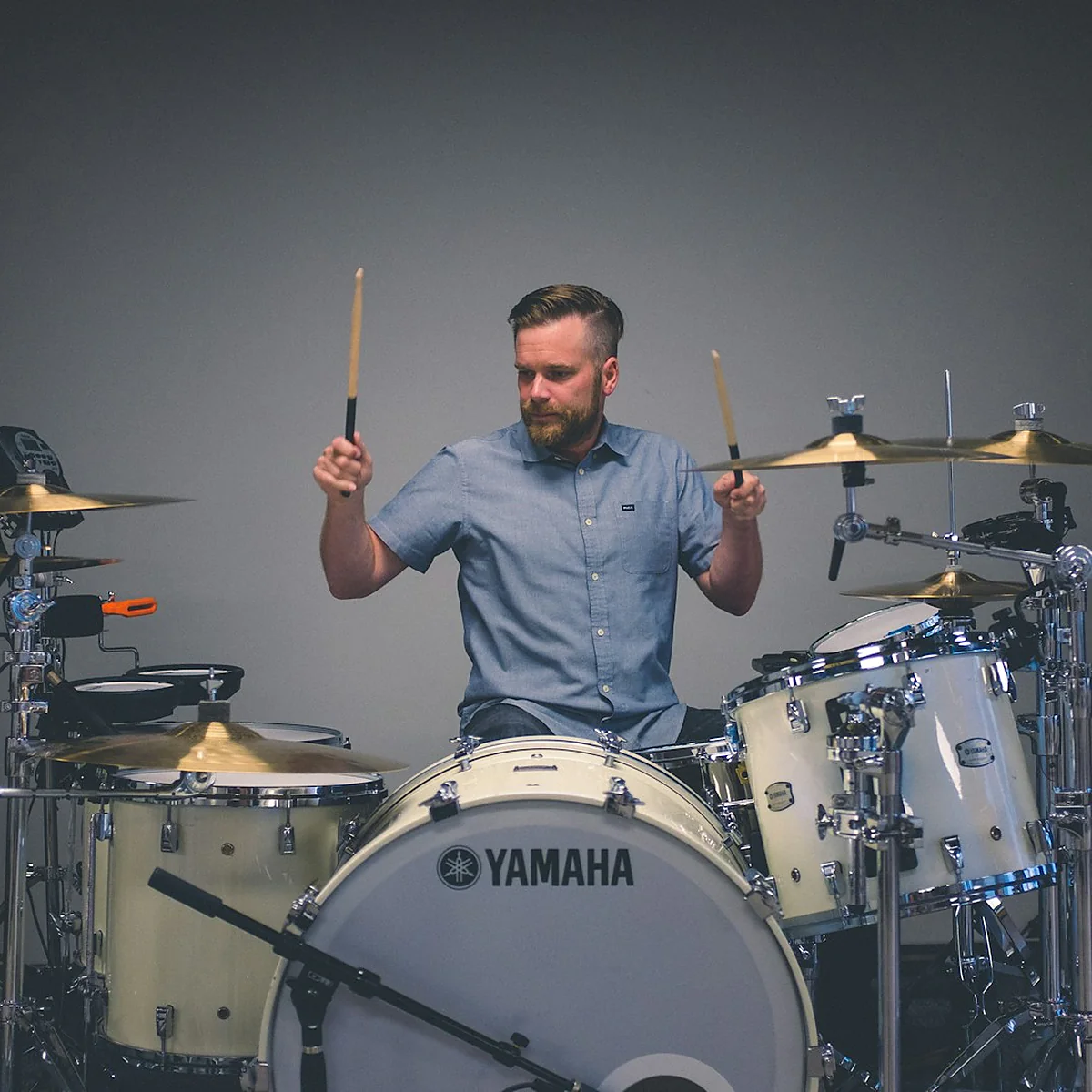
The kit sits behind the shield most Sundays, sticks resting on the snare, nobody climbing up to play it. Your singers are strong. Your guitarist holds his own. The set still slides out from under you anyway, because the one player who locks the whole band together is the seat you cannot fill.
Drums are the hardest role in the room to find and the fastest one a congregation notices when it goes missing. Here is why the seat stays empty, what a worship drummer actually needs to bring, a short audition you can run in ten minutes, what the job tends to pay, and how to cover the morning when no drummer is coming at all.
Why drums and bass are the hardest seats to fill
Every other instrument can lean on the drums. The drums lean on no one. A guitarist can bury a wrong chord under the band, a vocalist can drop out for a line and nobody flinches, but a drummer who rushes the chorus drags the whole room with him. The job has nowhere to hide, so it takes real skill to do quietly and well.
That skill is also rare. Fewer people grow up playing drums than guitar or piano, a kit costs more and is louder to practice on, and the good players get claimed fast by the first band that finds them. Bass sits in the same bind for the same reasons. The two instruments that form the engine of your sound are the two your pews are least likely to hand you for free. The seat can sit empty for a whole season while you cover it with a loop and hope.
What to look for in a worship drummer
A loud drummer is easy to find. The one who serves the song is worth hiring. Five things separate the two:
- Time. Steady tempo carries everything. A worship drummer is the metronome the rest of the band trusts, holding the same pace from the first downbeat to the last without speeding up when the room gets excited.
- Pocket. Time keeps the band together. Pocket makes it feel good. This is the groove a drummer locks in with the bass, the feel that makes a congregation want to move. You hear it the moment it is there and the moment it is gone.
- Dynamics. The best players are known for how quietly they can play, not how hard. A strong one can whisper under a soft verse, build into a chorus, and pull all the way back for a spontaneous moment without being told twice.
- Listening. A player married to the chart will run a song off a cliff. One who watches the leader follows a stretched chorus, a surprise key change, or an unplanned bare-vocal bridge and never misses the turn.
- Heart. The person behind the kit sets the tone for the platform, loud instrument and all. Look for a worshipper who happens to drum, not a drummer looking for a stage.
A simple audition you can run in ten minutes
You do not need a full rehearsal to know what you have. Pick one worship song the player already knows, sit the rest of the band out, and ask for three things in a row.
First, have them play the song to a click track, then kill the click halfway through and let them carry it alone. If the tempo holds, you have found a real timekeeper. If it drifts the second the click stops, keep looking. A church drummer who cannot hold time without help will cost you every set.
Second, run the song again and call the dynamics live. Soft on the first verse, full on the chorus, down to almost nothing on your hand signal. A drummer who follows your hand in the room will follow you on a Sunday.
Third, stretch something on purpose. Hold the last chorus an extra eight bars, or cut to a bare vocal with no warning. Watch whether they lock to you or freeze over the chart. That one moment tells you more than a polished audition video ever will.
What a church drummer tends to pay
Pay for a drummer moves with your region, the player's skill, and whether you want them for one Sunday or every week. Treat any number you read as a starting point to test against your own area, not a fixed rate.
A skilled per-service fill-in commonly runs somewhere between $75 and $200 for a morning, and drums often sit at the higher end of that range precisely because the seat is so hard to fill. A weekly anchor you can rely on is worth more than a one-off sub, since dependable time on this seat is rare and valuable. Our guide on how much to pay a worship musician breaks the numbers down by role and church size, and the complete hiring guide covers how to vet a player and set clear expectations before anyone sits at the kit. Settle the rate in writing before the first downbeat, and pay it promptly after.
When no drummer is coming at all
Some weeks you make every call and the throne stays empty. That happens with the hardest seat in the building, and you still have real options for Sunday.
A drum loop or a click with percussion can hold the pulse under an acoustic set, and a backing track can carry the groove on a weekend you want to go big. Expect $15 to $30 a month for a subscription. Keep it as a bridge, not a habit, because a congregation can feel the difference between a player breathing with them and a track running on rails. You can also borrow before you buy. A guitarist with decent time can move to a cajón for a week, or a drummer from a nearby church may free up for a single Sunday. When your own list runs dry, our guide to covering a last-minute gap walks through who to call and in what order.
The beat is holy work
Scripture never treats percussion as an afterthought. Psalm 150 calls the church to praise God with the clash of cymbals, with resounding cymbals loud enough to fill a room. The beat under a worship set carries real weight in that picture. It is part of how the people of God have made a joyful noise for three thousand years, and a drummer who holds that beat well is doing holy work, not just keeping time.
When the throne behind your band has sat empty too long, tell us what you need and the church you lead, and we will connect you with a vetted drummer who holds the pocket, follows your lead, and honors the heart of your room. If you want to see how the matching works first, here is how it works.
Common questions
How do I hire a church drummer?
Why are drummers so hard to find for church?
What should I pay a church drummer?
Fill the one seat that will not fill
When you have worked your own list and the drum throne is still empty, tell us what you need and the church you lead. We will connect you with a vetted drummer who can hold a room steady and serve your team well.