How to Run a Worship Rehearsal That Doesn't Waste Everyone's Time
A tight, respectful rehearsal plan that starts before anyone arrives. Send the set early, expect home practice, run a timed agenda, do a full run-through, and protect one real moment of worship for your team.
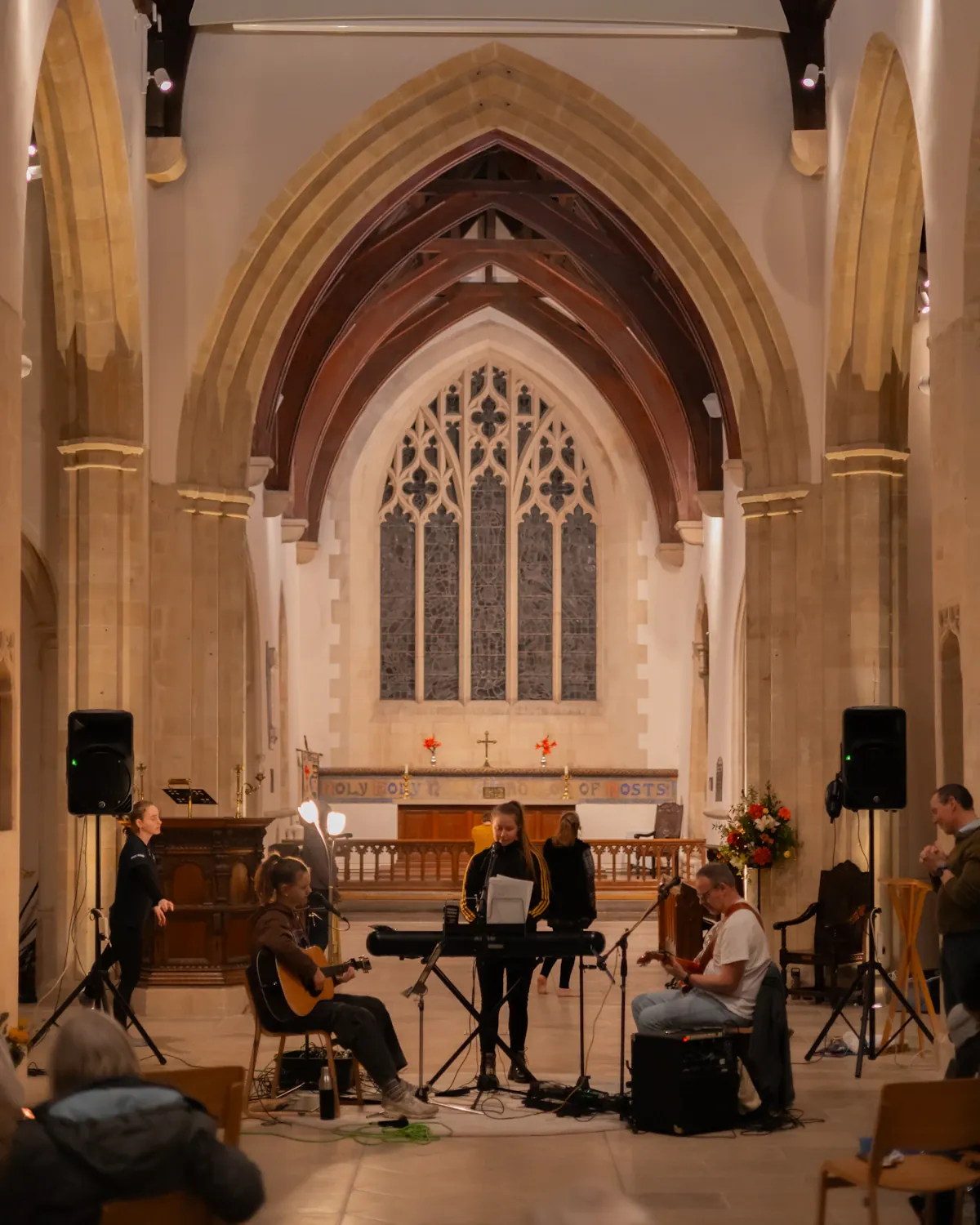
Think about the last worship rehearsal that ran 3 hours and accomplished about 45 minutes of actual work. Everyone left drained, the set was barely tighter than when you started, and 2 of your best volunteers went home wondering if this is worth their Tuesday nights.
A good midweek practice is one of the kindest things you can build for your team, because it tells busy people their time matters. The secret is simple to say and takes discipline to hold. Most of the work happens before anyone walks in the door.
The work starts before anyone arrives
The night falls apart or comes together based on what you do 3 days earlier. Prep is the whole game. When your team shows up already knowing the songs, you get to shape the music together. When they show up cold, you spend the evening as a music teacher, and everyone loses.
Set the tone with a simple prep rhythm:
- Send the set at least 3 days out. Include chord charts in the right keys, a reference playlist, and a note on anything unusual. Give people the raw material to prepare.
- Expect home practice, and say so. Your time together is for locking in as a band, not for learning notes one at a time. Name that standard plainly, and hold it kindly.
- Choose songs your team can actually reach. If half the set is brand new every week, no amount of prep saves you. Our guide to choosing worship songs helps you build a set that is singable and learnable in the first place.
A rehearsal is not where the team learns the songs. It is where they learn to breathe together.
Run a timed agenda
Wandering is what steals the night. A loose plan turns into endless circling on one bridge while the drummer checks his phone and the bass player quietly wonders why she left work early for this. Walk in with a written schedule and share it, so the whole room knows where the time is going.
A 90-minute plan that works for most teams looks like this:
- First 10 minutes: gather and pray. Start on time, even with people missing. Rewarding latecomers by waiting teaches everyone to arrive late.
- Next 45 minutes: work the set. Run each song once, then stop only for the spots that actually need it. Fix the specific problem, run it again, and move on. Resist the urge to polish what is already fine.
- Next 20 minutes: transitions and flow. Most sets fall apart between songs, not during them. Rehearse the seams, the key changes, and the spoken moments so the service does not reset between every song.
- Last 15 minutes: full run and worship. Play the set start to finish with no stopping, exactly as Sunday will go.
Do a full run-through, not a study session
The most common rehearsal mistake is stopping constantly and never once playing the set the way the congregation will hear it. A band that has picked apart 6 songs in pieces has still never played the service.
Play the whole thing. Before you close, run the set top to bottom with no stops. Treat a mistake the way you will on Sunday, by recovering and moving on instead of restarting. This one habit does more for a nervous team than any drill, because it turns a pile of songs into a service and shows everyone that they can carry it from downbeat to final chord.
If the full run exposes a rough spot, note it and give it a focused pass or two. Then run that section clean one more time so the last thing your team plays is a success, not the mistake.
The habit that changes everything
Before you plan the next night, name the one thing that would make Sunday noticeably better if you nailed it. Maybe it is the handoff into the sermon. Maybe it is a shaky new song. Build the practice around that single priority, and the smaller stuff falls in line. One clear target beats a night that chases everything and lands nothing.
Great teams also review, briefly. Take 5 minutes after Sunday to jot what worked and what did not, while it is fresh. Those quick notes sharpen your next set list and your next run-through. Over a few months they compound into a team that keeps getting tighter without anyone working harder.
Protect one moment of worship
Here is the trap that catches even organized leaders. You can run such a tight, efficient practice that your team never actually worships. They rehearse worship for 2 hours and never once meet with God in the room, and slowly the whole thing becomes a job.
Guard against that on purpose. Take the last song of your run-through, drop the lights, put the charts down, and let the team worship with no notes and no talking. A single song is enough. Your musicians need to encounter God before they ask a congregation to, and a team that has already met with Him midweek leads from an overflow on Sunday instead of an empty tank.
End on time, every time
Respecting the clock is a spiritual discipline for a leader. Say when you will finish. Then finish. When you promise a practice ends at 8:30 and it truly ends at 8:30, you earn a quiet trust that shows up in a hundred other corners of your ministry, from attendance to attitude to how freely people say yes the next time you ask. When it always creeps to 9:15, your most reliable people quietly start guarding their calendars.
If you consistently cannot fit the work into the time, the fix is upstream. Trim the set, tighten the prep, or shorten the song list before you steal another hour from people who gave you their evening. A leader who protects the end time is a leader worth following.
Running a great midweek practice is a learnable craft, and it is one of the highest-leverage skills a worship leader can build. If you want to sharpen it further, the Academy breaks down rehearsal, set building, and team leadership in depth, and our coaching work can help you reset a team's whole culture around time, prep, and worship. Respect your team's hours, and they will give you their best for years.
Common questions
How long should a worship rehearsal be?
How far ahead should I send the set list?
What if my volunteers won't practice at home?
Sharpen how your team rehearses
The Academy covers rehearsal, set building, and team leadership in depth, so your midweek practice keeps getting tighter and Sundays get easier.