How to Build a Worship Set That Flows (Keys, Tempo & Transitions)
The order of your songs does as much work as the songs themselves. Here is how to line up keys, tempo, and transitions so your set builds instead of stalling, and the room stays with you the whole way through.
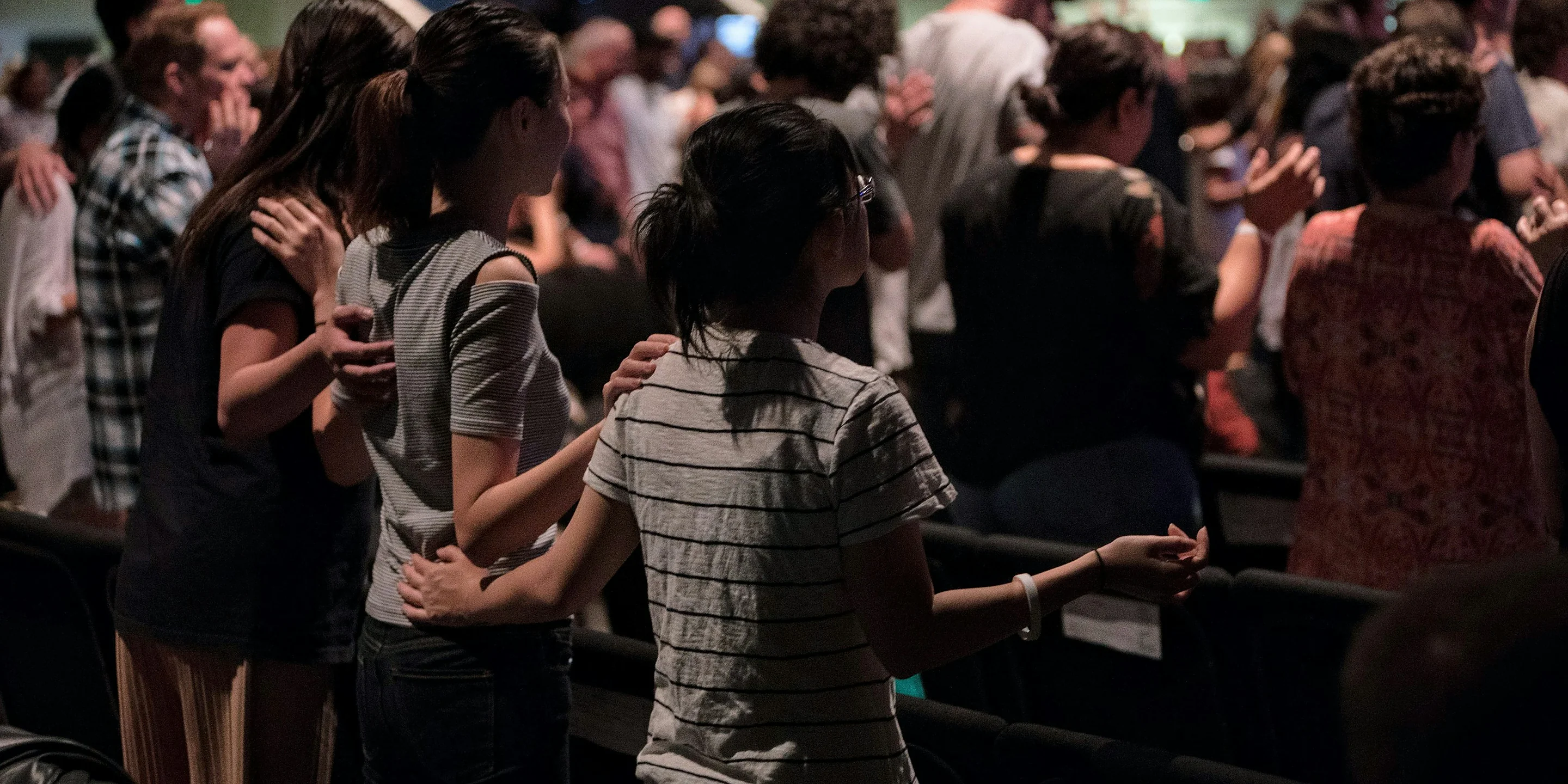
The band just finished a driving opener in B. The room is on its feet. Then the next song drops into a slow ballad in F, about as far from B as two keys can sit, and the keys player hunts for the new chord while the drummer counts it in cold. For a few seconds the congregation stands there, unsure whether to keep singing. By the time the song settles, the lift you spent three minutes building is gone, and you are starting again from the bottom.
A set that flows fixes that, and it is mostly a matter of order. Here is why sequence carries a service, how to line up keys that move without a jolt, how to shape the rise and fall of tempo, and how a simple pad under your transitions keeps a congregation leaning in from song to song. None of it needs a music degree. Most of it gets decided before you step on the platform.
Why the order of your set does its own work
Think of a set as one long song with gaps cut into it. Your congregation reads those gaps. When the songs climb, settle, and land in an order that makes sense, people stop watching the stage and simply sing. When the set lurches, they spend the quiet seconds wondering what is happening up front, and every jarring change asks the room to gather itself again from a standstill.
That is how you can play five strong songs and still lose the morning. The songs were never the problem. Their order was. Order is the one lever here that costs nothing. You already own the songs. Putting them in the right sequence is free, and it decides whether a set carries a room or keeps dropping it at the start.
Key relationships that let a set move without a jolt
Every key is closely related to a few others and distant from the rest. You do not need the theory underneath it to use it well. You need three moves.
First, lean on next-door keys. Keys a fifth apart share all but one note, so moving from one to the next feels like a step rather than a leap. A song in G sits right beside C and D. Line up a run of songs in G, C, and D, and the band glides across them while the room barely registers the change.
Second, reach for the relative minor when the mood needs to turn inward. Every major key has a minor built from the exact same notes. C major and A minor share them. G major and E minor share them. Dropping from a bright anthem into its relative minor lets the whole band stay on home ground while the feel softens for a reflective song.
Third, save the lift for the peak. Raising a song a half step or a whole step for its final chorus, from D up to E flat or on up to E, pushes the energy higher in a way the room feels in the chest. It is a strong spice. Use it once in a set, on the moment that has earned it, not on every chorus.
Under all three sits the rule that outranks them. Pick keys your congregation can actually sing. Keep the top of the melody around a D or E for an untrained voice, and transpose down when the recorded key climbs past that. A perfect key relationship means nothing if the room cannot reach the notes. This is where your master song list, the one place every congregational key and tempo already lives, turns set planning into a few minutes of choosing instead of a night of guessing.
Build a tempo arc instead of a tempo whiplash
Tempo is the other half of flow, and it tends to follow a shape most strong sets share. You gather the room with something up and declarative, settle into a mid-tempo song or two as people engage, then open into something slower and more intimate for the response near the end. Up, then down, roughly.
The mistake is almost never a slow song or a fast song. It is the whiplash from one into the other. Cutting from 140 beats a minute straight into 68 jolts a room awake the wrong way. Bridge the gap instead. Drop a mid-tempo song in front of your slowest so the floor comes down in steps. You can also have the drummer pull a fast song into a half-time feel, which keeps the same pulse underneath while the energy eases off. A set does not have to be a smooth ski slope from top to bottom. It just has to avoid the cliff.
Transitions and pads, the glue between songs
The space between two songs is where a set lives or dies. Handled well, that space is invisible. Handled badly, it is a cold count-in and a few seconds of silence that let the room go flat.
A pad is the simplest fix almost any team can add this week. A pad is a soft, sustained wash of sound in the key of the next song, held under the gap by a keys player or run from a track. It fills the quiet, feeds the band the coming key, and gives a vocalist room to pray or read a verse over the top without the music stopping dead.
When you change keys, let the pad move first, landing on the new key a beat before the band gets there. If the two songs share a note, lean on it. A common tone held across the change, by the pad or a single voice, keeps the ear anchored while everything else shifts around it. A short spoken moment over that wash, a line of Scripture or a word of encouragement, can carry a congregation from one song into the next far better than a four-count ever will. The aim is plain. Never let the sound fall to zero, because silence tells a room the moment is over.
Map next Sunday's set in twenty minutes
Here is the whole thing on paper. Pull your four or five songs and write each one's congregational key and tempo beside it. Lay them out in the energy order you want, usually something up front and something intimate near the end. Then walk the seams.
At each change, ask one question. Is this next key a neighbor, a relative minor, or a deliberate lift? If it is a hard jump, either reorder the set or plan a pad to carry it. Mark the single place you will lift for the peak so you do not spend it early. Note where a pad or a spoken line covers each gap. Twenty minutes with your song list open turns a pile of good songs into a set that goes somewhere, and it runs even faster once you have already done the work of choosing worship songs that are true and singable in the first place. If you want the full weekly rhythm behind it, that is what we walk through in the Academy's set lists track.
Worship has always moved in a planned order
Ordering worship on purpose is not a modern idea. Fifteen of the psalms, Psalms 120 through 134, each carry the same heading, "A Song of Ascents" (Psalm 120, superscription). Tradition holds they were sung in sequence by pilgrims traveling up to Jerusalem for the feasts, a set list for a journey that moves from distress in the opening songs toward arrival and blessing at the close. The people of God have ordered their songs on purpose since long before a stage or a click track existed. A set that flows carries that same old instinct. You are doing more than picking songs. You are walking a room somewhere.
Common questions
How do I move from one song into a very different key?
Should every worship set go fast to slow?
What is a pad, and do I need special gear to use one?
Learn to build sets that move
This post is the overview. The set lists and song selection track in our Academy teaches the full method, key choices, tempo, transitions, and the weekly rhythm to run it all by. The course is still in development, so there is no finished product yet and no launch date we would promise you. Join the waitlist and we will tell you the moment it opens, and send you free worship resources while you wait.