Small Church Worship: Building a Great Team With Only a Few People
You do not need a full band to lead worship well. Here is how two or three faithful people can lead a room that is fully sung, and where a little help fits.
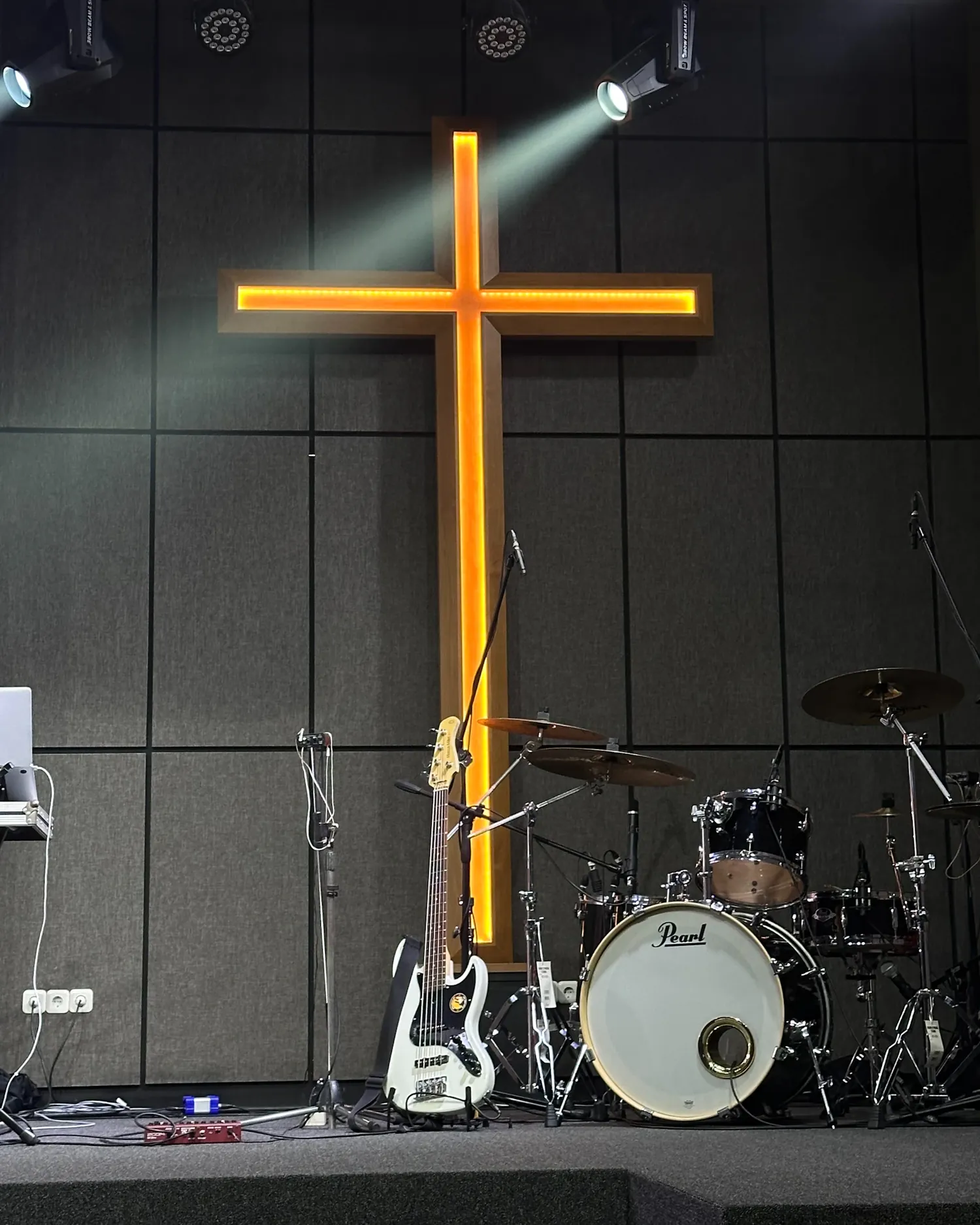
It is 8:40 on a Sunday morning. You have a guitar, a single vocalist who also runs the slides, and a keys player who texted last night to say she is out with a sick kid. Sound check is in twenty minutes, and the plan you built for four now has to work for two.
You have seen the videos. The eight-piece band, the fog, the click running clean in everyone's ears. You love your church, and still some part of you does the math and feels short. Set that feeling down for a minute. Leading a small church worship team is not a lesser calling. It is a different instrument, and played with intention, it can lead a room straight to God.
A small church worship team is not a lesser version of a real one
Somewhere along the way, big production became the picture in every leader's head of what worship is supposed to look like. Those rooms are moving. They are also not the standard God set. Scripture is full of Him doing the most with the fewest. Gideon watched his army shrink to three hundred before the battle even started. A boy handed over five loaves and fed a crowd. God has never measured worship by the size of the resource. He looks at the heart of the hands holding it.
Excellence lives in the intention you bring to the players you have, not in how many you have. A congregation can tell the difference between a team hiding behind volume and a team that means every word it sings. Two players who are fully present will lead a room further than eight who are just covering parts. Start there, and the rest of this is craft.
Arrangements that hold up with two or three players
When you only have a few hands, the temptation is to make each one do as much as possible. Resist it. A thin, deliberate arrangement beats a full one that is fighting itself. Strip every song back to what actually carries it, then build up only where you have room to.
A few things that work with two or three people:
- Let one instrument carry the song. A single acoustic guitar or a piano, played steady and confident, is enough foundation for a whole room to sing over. You do not need a second harmonic instrument to feel complete.
- Guard the space. Silence and dynamics do more work than another part ever will. Pull everything back to one voice and one instrument on a verse, then open up on the chorus, and the lift feels bigger than any amount of gear could make it.
- Let the congregation be the choir. Your job with a small team is not to perform the song for the room. It is to lead the room in singing it. Drop out on a familiar chorus, let a hundred voices carry it, and you will have the fullest sound in the building.
- Match the key to the people singing it, not to the record. A song a whole congregation can reach beats an impressive key nobody in the seats can sing.
Fill the gaps honestly with tracks and pads
There is no shame in letting technology cover a part you do not have. A pad sound under an acoustic guitar adds the warmth a missing keys player would have brought. A well-chosen multitrack can hand you a bass line, a subtle synth, or a full band on the one Sunday you want to go big. Used with taste, these tools serve the room. Used carelessly, they turn your team into a group miming over a record.
A simple rule keeps it honest. Run the things nobody misses as buttons, and play the things the congregation came to hear played. A pad, a click, an ambient layer, those can live in a track without anyone feeling cheated. The lead vocal, the main instrument, the moments the congregation connects to, keep those human and live. If you are weighing whether to bring click and monitoring into your setup, our guide on adding click tracks and in-ear monitors walks through how to do it without losing the feel of a live room.
Grow the few you already have
The quickest way to stay short-handed is to wait for trained players to show up on their own. They rarely do. The players you need are usually sitting in your own pews, a little unsure, waiting for someone to invite them and show them the ropes.
Look for faithfulness before flash. A steady person who shows up and takes correction will outgrow a gifted one who does neither. Give a nervous singer one line to own before a whole song. Hand a new guitarist a two-chord pad part before a full arrangement. Growth on a small team is slow and personal, and it is the real work of building something that lasts. If you are starting closer to zero than to three, our walkthrough on building a worship team from the ground up lays out the first steps.
When it is time to bring in help
Even a healthy, growing team hits Sundays that are bigger than the people available. Easter. A Christmas Eve service. The weekend your one guitarist is out of town and no one can cover. Those are the moments to bring in help. Asking for it is good stewardship of a weekend that carries real weight, and your ministry is stronger for the wisdom it takes to ask.
Two kinds of help are worth knowing about. The first is a coaching or team development session, where an outside set of ears helps you get more out of the players you already have. The second is an occasional, vetted fill-in for a seat a volunteer cannot cover. They know the songs, honor your church's heart, and leave your regulars encouraged rather than shown up. When you need to bring in a vetted musician for one big Sunday, the right one plays alongside your team so the room can worship freely.
Common questions
Can you lead worship with just one or two people?
Should a small church use backing tracks?
How many people do you really need for a worship team?
Fill the one seat your team cannot this Sunday
When a big Sunday needs a player your volunteers cannot cover, we will connect you with a vetted musician who knows the songs and honors your church's heart. No pressure and no long commitment, just the right person for the seat that matters most.